Account-Based Marketing (ABM) is a game changer for businesses looking to make meaningful connections with their ideal clients. Instead of casting a wide net, ABM focuses on specific high-value accounts that matter most. This guide will walk you through the essential strategies for crafting effective ABM campaigns that resonate with your target audience, aligning sales and marketing teams, and measuring your success. Let’s dive into the world of ABM strategies and see how you can tailor your approach for maximum impact!
Key Takeaways
- Identify key accounts and focus your marketing efforts on them for better results.
- Personalize your outreach to address the specific needs of each target account.
- Ensure sales and marketing teams collaborate closely for a unified approach.
- Use multiple channels to engage your target accounts effectively.
- Regularly measure and adjust your strategies based on performance data.
Understanding ABM Strategies
Defining Account-Based Marketing
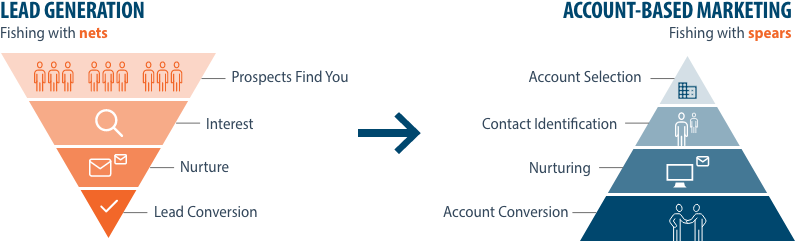
Okay, so what is Account-Based Marketing (ABM)? It’s all about flipping the traditional marketing funnel on its head. Instead of casting a wide net, you’re laser-focused on a select group of high-value accounts. Think of it as a sniper rifle approach versus a shotgun. You identify the accounts that have the biggest potential impact on your business and then tailor your marketing and sales efforts specifically to them. It’s not just about personalization; it’s about creating a bespoke experience for each account. This means understanding their unique challenges, goals, and needs, and then crafting content and solutions that directly address them. It’s a more resource-intensive approach than traditional marketing, but the payoff can be huge in terms of increased revenue and stronger customer relationships. ABM programs can lead to vast improvement in account engagement.
Account-Based Marketing (ABM) is a game changer for businesses looking to make meaningful connections with their ideal clients. Instead of casting a wide net, ABM focuses on specific high-value accounts that matter most. This guide will walk you through the essential strategies for crafting effective ABM campaigns that resonate with your target audience, aligning sales and marketing teams, and measuring your success. Let’s dive into the world of ABM strategies and see how you can tailor your approach for maximum impact!
The Importance of Targeting
Why is targeting so important in ABM? Well, it boils down to efficiency and impact. By focusing on the right accounts, you’re not wasting time and resources on leads that are unlikely to convert. You’re putting all your eggs in a few carefully selected baskets. This allows you to create highly personalized and relevant content that resonates with decision-makers at those accounts. The goal is to become a trusted advisor and partner, not just another vendor. Effective tailoring marketing efforts can make all the difference.
Here’s a quick example:
- Imagine you’re selling cybersecurity software.
- Instead of running generic ads, you identify five key accounts in the financial services industry.
- You then create custom demos and case studies that highlight how your software can protect them from specific threats they face.
That’s the power of targeted ABM.
Key Components of ABM
So, what are the key components that make up a successful ABM strategy? It’s more than just sending personalized emails. It’s a holistic approach that involves several critical elements:
- Identifying High-Value Accounts: This is where it all starts. You need to define what makes an account a good fit for your business and then use data and research to identify those accounts.
- Creating Account Profiles: Once you’ve identified your target accounts, you need to develop detailed profiles that include information about their business, industry, challenges, and key decision-makers.
- Developing Personalized Content: This is where the magic happens. You need to create content that speaks directly to the needs and interests of your target accounts. This could include blog posts, ebooks, videos, case studies, and more.
- Coordinating Sales and Marketing Efforts: ABM is a team sport. Sales and marketing need to work together to develop and execute the ABM strategy. This means sharing insights, aligning goals, and coordinating outreach efforts.
- Measuring and Optimizing: Like any marketing strategy, ABM needs to be measured and optimized. You need to track key metrics like engagement, conversion rates, and revenue to see what’s working and what’s not. Blend and evolve the two into a singular marketing strategy.
ABM is not a set-it-and-forget-it strategy. It requires continuous monitoring, analysis, and adjustment to ensure that you’re getting the best possible results. It’s about building relationships and providing value, not just making a sale.
Crafting Personalized Content
Tailoring Messages for Each Account
Okay, so you’re doing ABM. That means personalization is no longer optional; it’s table stakes. Forget those generic email blasts. We’re talking about crafting messages that feel like they were written specifically for each account. It’s about showing them you get their world, their challenges, and their goals. It’s not just about using their name in the subject line; it’s about relevance at every touchpoint. Think of it as creating a custom suit versus buying something off the rack. Which one makes a better impression?
Utilizing data for insights
Data is your best friend here. You need to dig deep and understand everything you can about your target accounts. What are their pain points? What are their industry trends? Who are the key decision-makers? Use that data to inform your content strategy.
Here’s a simple breakdown:
- Company Size: Tailor messaging to reflect the scale of their operations.
- Industry: Address specific challenges and opportunities within their sector.
- Key Personnel: Understand their roles and tailor content to their interests.
Data isn’t just numbers; it’s a story waiting to be told. Use it to craft a narrative that resonates with your target accounts.
Aligning sales and marketing Teams
This is a big one, and honestly, it’s non-negotiable for ABM success. Your sales and marketing teams can’t operate in separate worlds; they need to be true partners, working in lockstep. Misalignment is a classic challenge, but it’s one you absolutely have to address for ABM to succeed.
Building Collaborative Strategies
Getting sales and marketing on the same page is essential for ABM to work. They need to agree on who the target accounts are and what success looks like. It’s like trying to bake a cake with two different recipes – you’ll end up with a mess. Start by having regular meetings where both teams can share insights and plan together.
- Establish common definitions for target accounts and qualified leads.
- Hold regular joint meetings to review progress and share insights.
- Use shared tools and platforms to foster better alignment.
Sharing insights and data
Imagine sales has some intel from a recent call, and marketing is running a campaign that could really use that info. If they aren’t talking, that’s a missed opportunity! Sharing insights and data is all about making sure both teams have the full picture. We integrated our CRM systems and marketing automation tools to ensure everyone was on the same page. This integration was a game-changer, as it allowed our sales and marketing teams to share data effortlessly and stay aligned on our goals.
By working together, sharing goals, and communicating and collaborating on projects and tasks, your sales and marketing teams can provide your customers with the most relevant, high-quality content they deserve.
Establishing common goals
If sales is chasing one goal and marketing is after another, you’re just spinning your wheels. Common goals are the glue that holds everything together. Think about it: if both teams are aiming for the same revenue target or account engagement rate, they’re way more likely to help each other out. Here’s how to make it happen:
- Set shared KPIs to measure the success of ABM campaigns.
- Ensure both teams are working towards common objectives.
- Collaborate on analyzing campaign performance data to identify areas for improvement.
Implementing Effective Outreach Tactics
Multi-Channel Engagement
Don’t just stick to one way of reaching out! To really get noticed, you’ve got to use a mix of channels. Think about it: are your target accounts glued to LinkedIn? Maybe they’re more responsive to email, or perhaps a well-timed social media ad will catch their eye. A multi-channel approach means you’re not relying on a single point of contact. It increases your chances of getting through to those busy decision-makers and helps you figure out which channels work best for each account. It’s about meeting them where they already are and reinforcing your value consistently.
- Personalized emails
- LinkedIn messages
- Social media ads
Targeted Advertising Approaches
Mass marketing is a thing of the past; ABM is all about laser focus. You’re aiming to land those “larger, better-fit accounts,” and that means your advertising needs to be just as targeted. Instead of spreading your budget thin across numerous channels, concentrate your resources where your key accounts are most active. This could involve hyper-specific LinkedIn ad campaigns or other platforms where your target accounts spend their time. The goal here is quality engagement with the right accounts, not just quantity of impressions.
Personalized Email Campaigns
Email is still a powerful tool for direct communication. Personalized emails can significantly increase open and engagement rates by delivering content that speaks directly to the recipient’s specific challenges and goals. Use the insights you’ve gathered about each account to segment your email lists. Tailor your messages based on the account’s industry, their role in the buying process, and their specific pain points. Automation tools can help you scale this personalization, triggering emails based on specific actions or milestones.
Personalization is absolutely key, and it goes way deeper than just slotting in a first name. You need to understand what your target accounts truly care about. What are their specific pain points? What are their business objectives? What projects are they currently focused on? Tailor your messages, your content, and even your demos to speak directly to their world.
Measuring Success in ABM
So, you’ve put in the work and launched your ABM strategy. Great! But how do you really know if it’s paying off? It’s not just about high-fives; it’s about seeing what’s connecting with your target accounts and tweaking your approach for even better results. Unlike general marketing, ABM is laser-focused, so your metrics need to be too. It’s about quality, not just quantity. Let’s get into how to measure your ABM performance.
Key Performance Indicators
When it comes to ABM, you’re trying to move entire accounts through your sales funnel, not just individual leads. This means your key performance indicators (KPIs) will look a bit different. You’ll want to focus on account-level engagement. Are key decision-makers within your target accounts interacting with your content? Are they spending time with your interactive product demos? These are crucial signs.
Key metrics to watch include account engagement rates (how often and how deeply target accounts interact with your brand), conversion rates within these accounts (e.g., demo requests, meetings booked), and ultimately, the revenue generated from these specific accounts. It’s also vital that your sales and marketing teams define what success looks like and ensure your content is truly helping to guide accounts toward a sale.
Analyzing Engagement Metrics
Gathering data is one thing; using it to make smart decisions is where the real magic happens. With ABM, you’ll likely have a lot of information coming in, so the trick is to filter through the noise and concentrate on data that directly aligns with your business goals and the specific characteristics of your target accounts. Your data should clearly show you what’s working and what’s not, allowing you to adjust your strategy on the fly. For instance, if you see high engagement with a particular piece of content, but low conversion to a sales call, you might need to adjust the call-to-action or the follow-up process.
Regularly tracking metrics like customer acquisition cost (CAC) for target accounts, average deal size, and overall customer engagement will give you a comprehensive picture of your ABM effectiveness. This data-driven approach helps you understand the true impact of your ABM efforts. Great data forms the cornerstone of effective ABM, enabling the highly personalized approach that makes ABM so powerful. Use your analytics to continuously refine your campaigns and ensure you’re investing your resources wisely.
Adjusting Strategies Based on Data
So, you’ve got all this data – now what? It’s time to put it to work! If you’re seeing that a particular type of content is really resonating with your target accounts, double down on it. If a specific channel isn’t performing, don’t be afraid to cut your losses and reallocate those resources. ABM is all about being agile and responsive.
Think of your ABM strategy as a living, breathing thing. It’s not set in stone. You need to constantly monitor, analyze, and adjust based on the data you’re seeing. This iterative process is what will ultimately lead to success.
And don’t forget the importance of clean data; consider using data enrichment tools to keep your information on target accounts accurate and current.
Leveraging Technology for ABM
Technology is a game-changer in account-based marketing. It’s not just about having tools; it’s about using them smartly to make your ABM efforts more effective and efficient. Let’s explore some key areas.
Essential Tools and Software
Choosing the right tools is essential for ABM success. You need software that can help you identify target accounts, track engagement, personalize content, and measure results. Think about platforms that integrate well with your existing CRM and marketing automation systems. Some popular options include HubSpot, Marketo, and Salesforce, all of which offer ABM features.
Automation in ABM Campaigns
Automation is your friend when it comes to ABM. It helps you scale your efforts without losing that personal touch. Here’s how:
- Automated email sequences: Send personalized emails to key contacts at your target accounts.
- Dynamic content personalization: Tailor website content based on the account visiting.
- Lead scoring: Prioritize accounts based on their engagement with your marketing materials.
Automation isn’t about replacing human interaction; it’s about making it more impactful. It frees up your team to focus on building relationships and closing deals.
Integrating CRM Systems
Your CRM is the heart of your ABM strategy. Integrating it with your other ABM tools is crucial for a unified view of your target accounts. A well-integrated CRM allows you to:
- Track all interactions with target accounts in one place.
- Share insights between sales and marketing teams.
- Measure the ROI of your ABM campaigns accurately.
Best Practices for ABM Campaigns
Starting Small and Scaling Up
It’s tempting to jump in headfirst and target a huge number of accounts right away, but it’s often smarter to start small and grow gradually. Pick a handful of your most promising, well-defined accounts for your initial campaign. This lets you really focus your efforts, dedicate the necessary resources for deep personalization, and learn what works without getting overwhelmed. Think of it as a pilot program before a full-scale launch.
Continuous Learning and Adaptation
Your first ABM campaign is a fantastic learning experience. It’s super important to monitor your progress closely right from the start. Pay attention to what’s resonating and what’s falling flat. Are you seeing engagement from your target accounts? Are your personalized messages leading to conversations? Are you generating qualified leads? Use this data to tweak and refine your approach. Maybe one type of message works better than another, or one channel is outperforming the others. Don’t be afraid to make changes based on what the numbers are telling you; this iterative process is crucial for optimizing your campaigns and achieving long-term success.
Maintaining Customer Relationships
ABM isn’t just about landing new accounts; it’s also about nurturing and growing existing relationships. Think of it as giving your dream accounts the VIP treatment they deserve.
Maintaining strong customer relationships is key to long-term success in ABM. Regularly check in with your key accounts, provide them with ongoing support, and look for opportunities to expand your relationship. This could involve offering new products or services, providing additional training, or simply staying in touch to ensure they’re happy with your solutions.
Here are some ways to maintain customer relationships:
- Personalized thank-you notes
- Exclusive webinars
- Dedicated customer support channels
To make your Account-Based Marketing (ABM) campaigns really work, focus on understanding your audience. Create personalized messages that speak directly to their needs and interests. Use data to track what works and what doesn’t, and adjust your strategy accordingly. For more tips and tools to boost your ABM efforts, visit our website today!
Wrapping It Up: Your Path to ABM Success
In conclusion, mastering Account-Based Marketing (ABM) is all about being smart and focused. By zeroing in on the right accounts and personalizing your outreach, you can build real connections that matter. Remember, it’s not just about sending out a bunch of messages; it’s about making sure those messages hit home with the people who matter most. Keep your sales and marketing teams aligned, and don’t be afraid to adjust your strategies as you learn what works. With the right approach, ABM can lead to better relationships and bigger wins for your business. So, take these strategies, put them into action, and watch your targeted efforts pay off!
Frequently Asked Questions
What is Account-Based Marketing (ABM)?
Account-Based Marketing (ABM) is a strategy that focuses on targeting specific high-value companies instead of a broad audience. It’s like treating your best potential clients as VIPs, giving them special attention and tailored messages.
Why is targeting important in ABM?
Targeting is crucial because it allows you to focus your efforts on the accounts that matter most to your business. By understanding their needs and challenges, you can create more relevant and effective marketing.
How can I create personalized content for my ABM campaigns?
To create personalized content, research each target company thoroughly. Understand their industry, challenges, and key decision-makers. Then, craft messages and materials that speak directly to their needs.
How do I align my sales and marketing teams for ABM?
Aligning sales and marketing teams involves working together as partners. Share insights, set common goals, and create a unified strategy to ensure everyone is on the same page.
What outreach tactics should I use for ABM?
Effective outreach tactics include using multiple channels like personalized emails, targeted ads on social media, and even direct mail. The key is to engage your target accounts where they are most active.
How can I measure the success of my ABM efforts?
You can measure success by tracking key performance indicators (KPIs) like engagement rates, conversion rates, and the overall return on investment (ROI) from your campaigns.