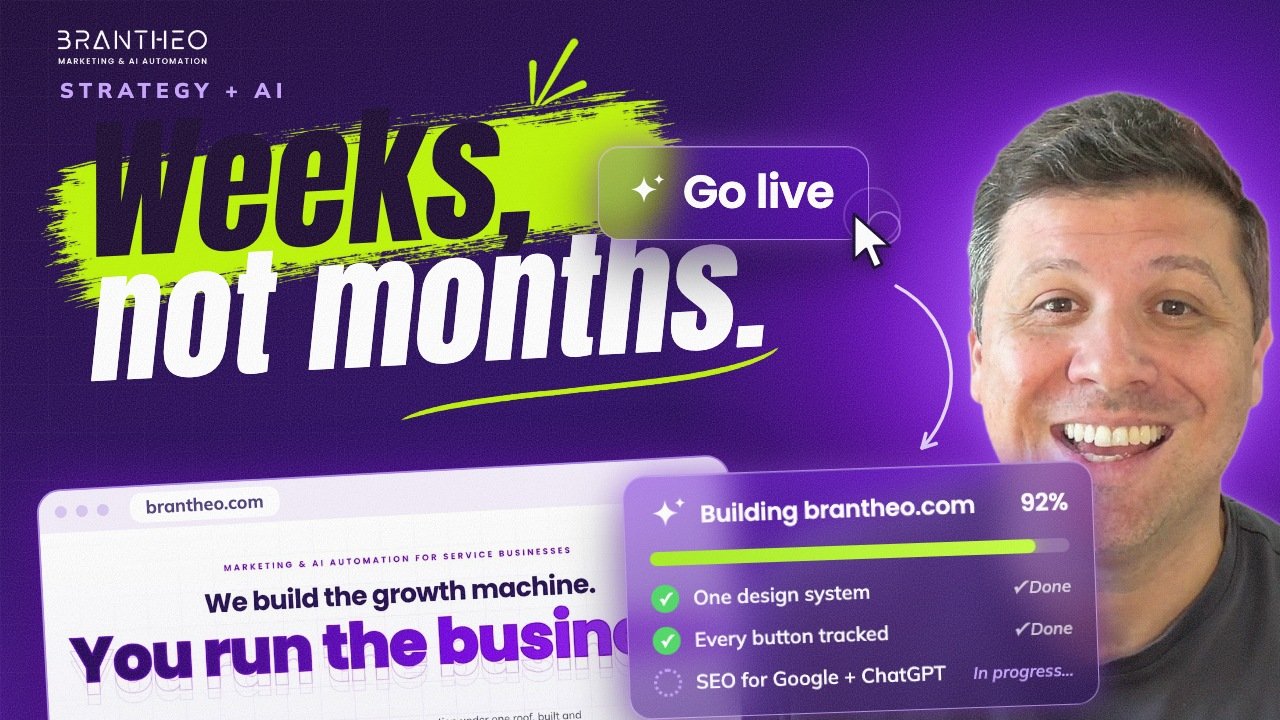
Our new website took one week to build. A site this size used to take me at least three months. AI did a lot of the work, so I want to be specific about how, because AI website design gets sold online as one prompt and a finished site five minutes later. That isn't what happened here. I made the decisions. The AI did the heavy lifting, fast, and I checked everything it produced.
Below: what that week looked like, the four things built into all 38 pages, and a three-question test you can run on your own small business website, from your phone, in about ten minutes.
Key Takeaways
- A website built with AI still needs a person making the calls. Our 38-page site took a week because the decisions came first and the AI handled production.
- One design system (same fonts, spacing, colors and buttons) keeps every page looking like the same company, including pages you add later.
- Conversion tracking belongs in the build: tagged links, forms that save the lead's source, and click events on the buttons that matter.
- Mobile website speed is free to measure with PageSpeed Insights. WordPress and Wix sites can both be fast.
- Three questions cover most of it: same company feel, fast on a phone, and where your last lead came from.
Prefer to watch? Here's the one-minute version.
What AI website design looked like on our site
The version you see in ads: describe your business, wait a few minutes, get a website. The homepage usually looks fine. By page four the buttons have changed color, the copy could belong to any company, and nothing measures what visitors do.
Our week went differently. Before any page existed, I set the parts that never change: fonts, spacing, colors, button styles, how a section title looks. Then I approved one model page per type. The page for dentists, for example, became the model for 14 industry pages, including plumbers, roofers, law firms and accountants.
From there the AI did the volume. It built each page from the approved model, wrote first drafts from my notes, adjusted layouts for phone and tablet, and redid things when I said no. I said no a lot. Every page was checked at phone and tablet width before it went live. The repetitive work got fast. The judgment took as long as it always has.
What came built into all 38 pages
One design system, so every page looks like the same company
For a small business website, a design system is a short list of rules: two fonts, a fixed set of text sizes, a handful of colors, one or two button styles, the same spacing between sections. Developers call these design tokens. Every page on our site is built from the same set, so the purple is the same purple everywhere.
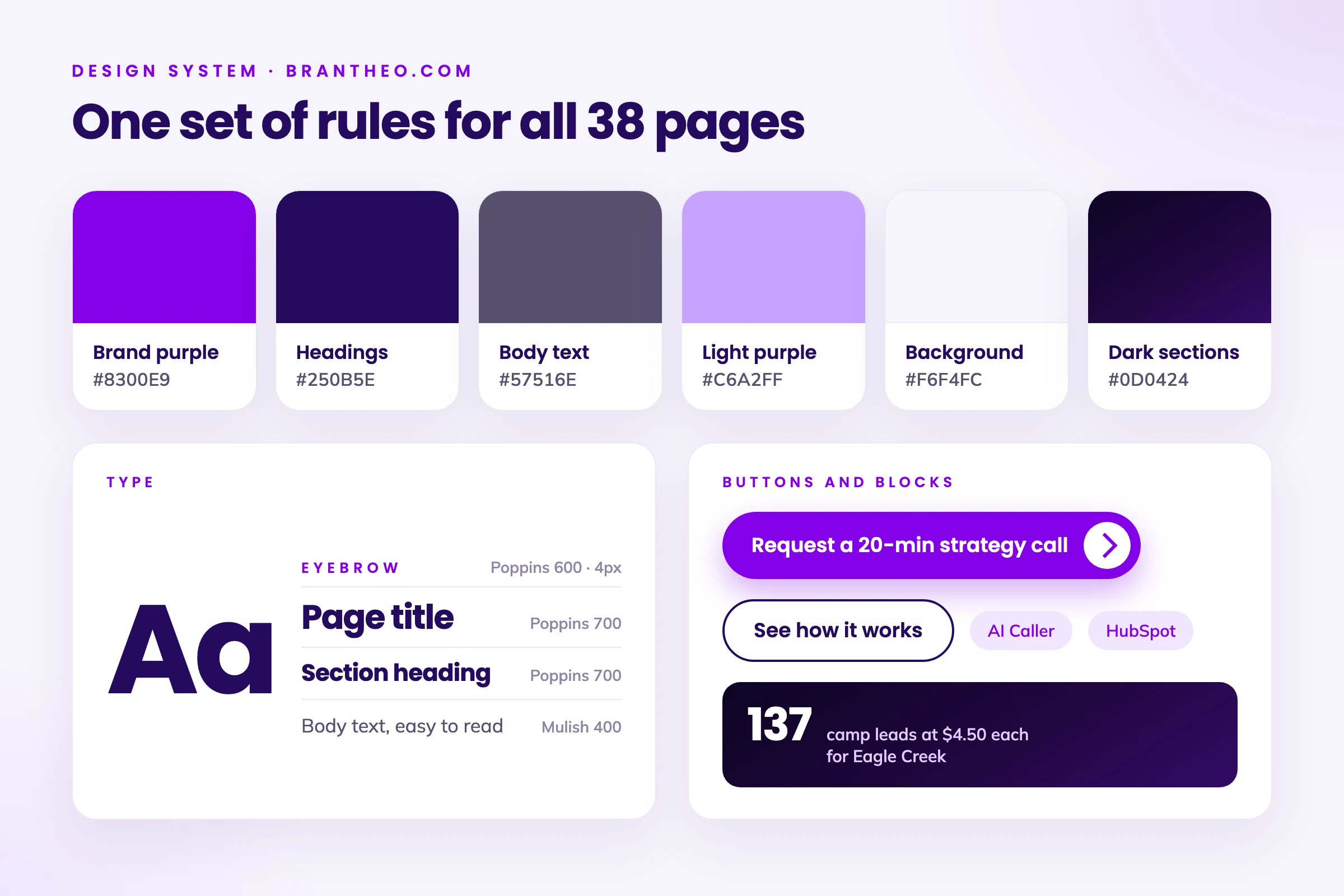
When the fonts or buttons change between your homepage and a service page, the site feels stitched together. Visitors can't name what's off. They just trust it a little less.
Written for Google and ChatGPT, in the words customers use
Each page is built around a term our clients actually search, like "AI receptionist for dentists" or "HVAC marketing agency," with a clear title, a plain description of the service and answers to the questions people ask before they buy. That gives Google and ChatGPT something specific to work with. It doesn't guarantee a ranking or a recommendation, and anyone who promises either is guessing. More on that in our post on ChatGPT local SEO.
Every button tracked, so we know where each lead came from
Tracking went in while the pages were being built, instead of being bolted on after launch. On a client site, website conversion tracking comes down to three pieces:
- UTM tags on every link you control: ads, social posts, emails and your Google Business Profile.
- A form that saves that source with the lead and sends it to your CRM, usually the HubSpot or Zoho CRM account you already own.
- Click events on the buttons that matter, like call, book and submit.
This is what makes results provable. At Eagle Creek Soccer Academy, every lead lands in the client's HubSpot with its source attached. That's the only reason we can say 137 leads came in over 40 days at $4.50 each, and that 11.8% of them converted.
Light pages that load fast on a phone
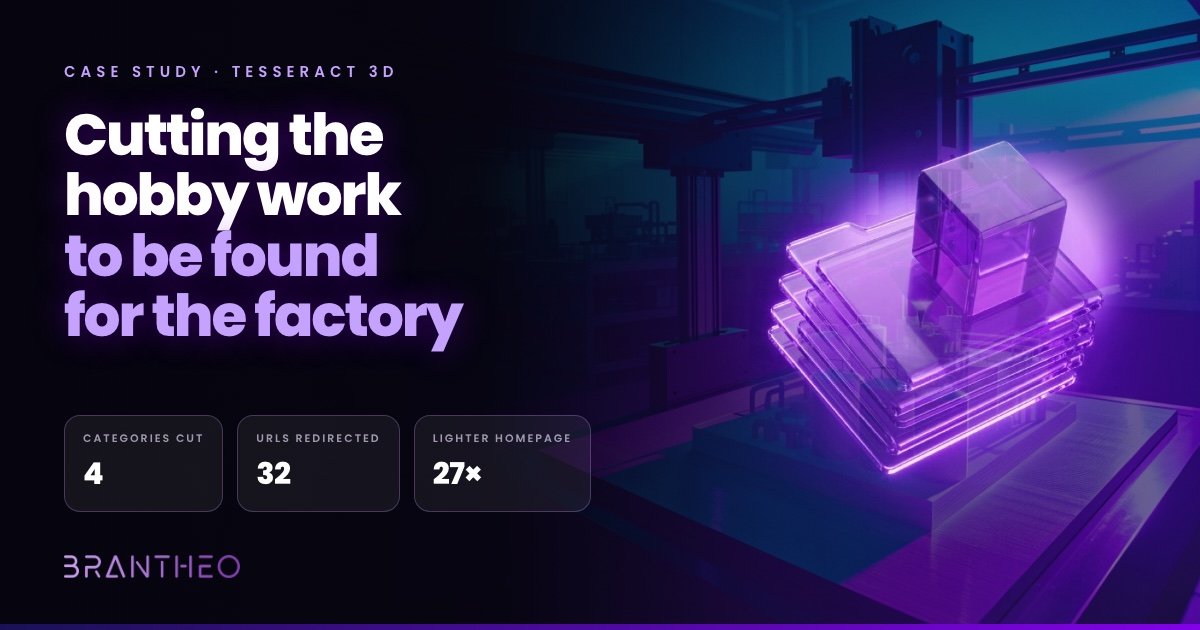
Our site runs on WordPress. Plenty of slow sites run on WordPress too, and on Wix. What slows a page down is what it loads: oversized photos, slider plugins, scripts from tools you cancelled years ago. We load only what each page needs. Two client rebuilds: the new Tesseract 3D homepage, on Wix, is 27 times lighter than the old one, and NextAero, built inside their own HubSpot, went from a PageSpeed score of 70 to 95+.
The 3-question test for your small business website
Grab your phone and switch to cellular data, since that's how a lot of your customers see the site. Click through three pages: the homepage, a service page and the contact page. Then answer these.
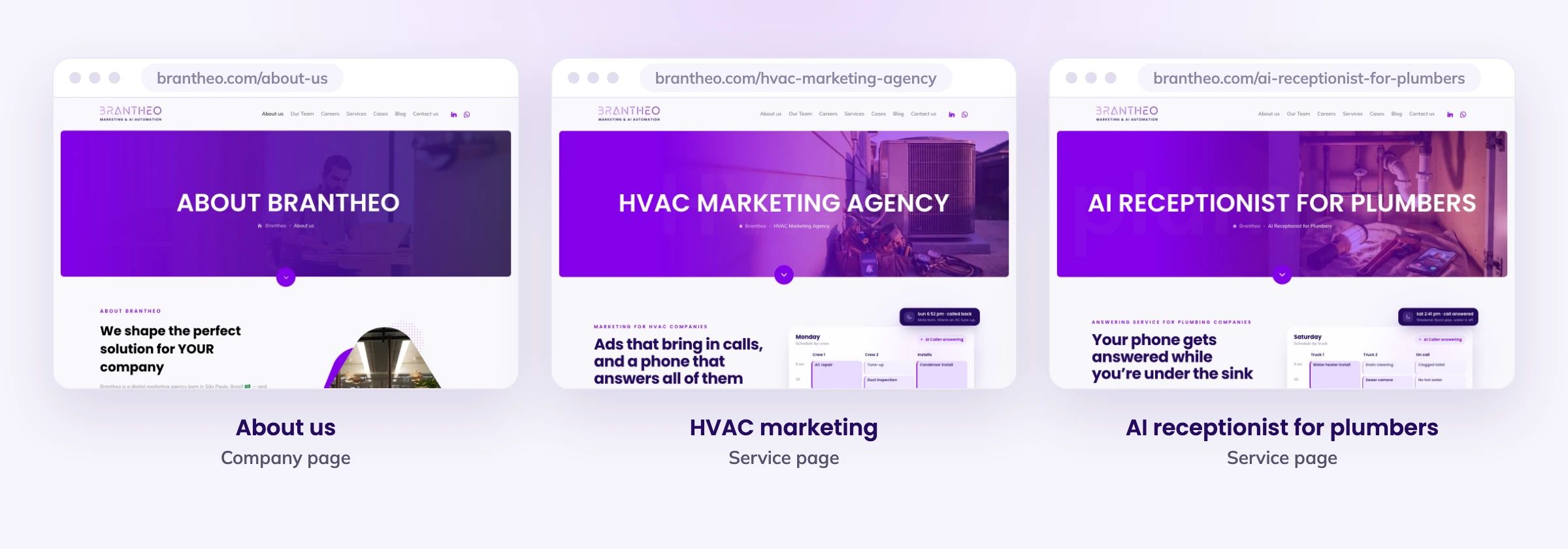
1. Do the pages look like the same company?
Screenshot all three and put them side by side. Compare fonts, button colors and shapes, spacing and where the logo sits. More than two fonts or two button styles usually means the site was built one page at a time, with no shared rules.
2. Does it load before you lose patience?
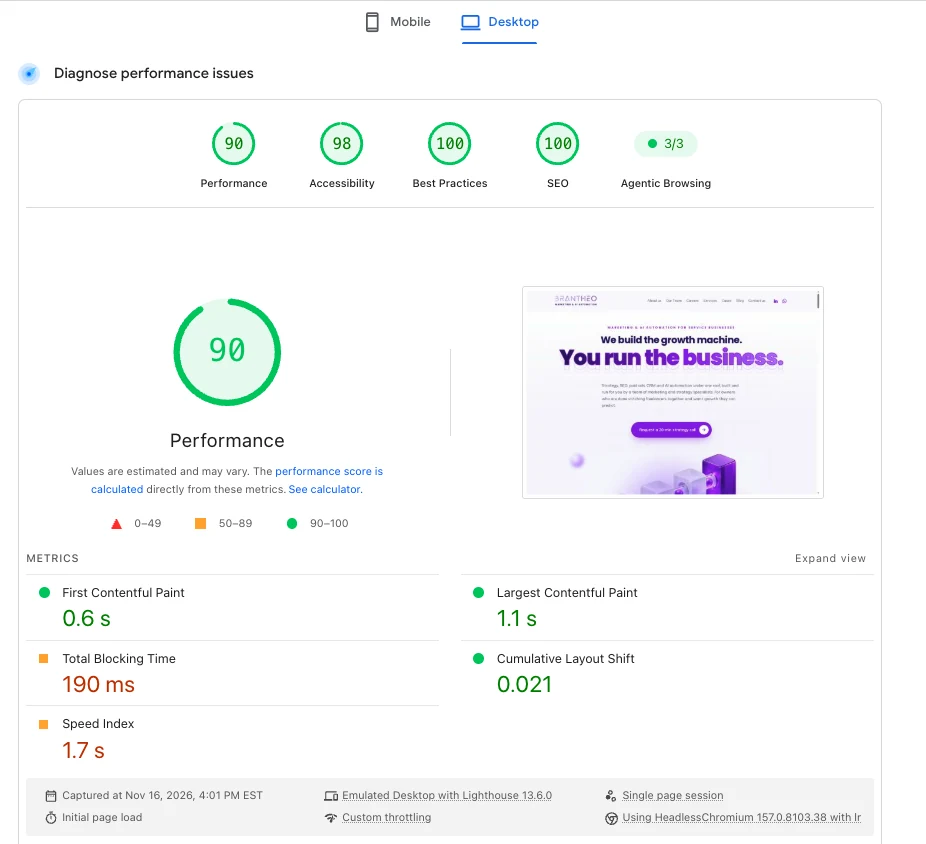
Paste your address into PageSpeed Insights and stay on the Mobile tab. If your site has enough traffic, the top section shows what real Chrome users experienced; the score below is a lab test. Google's Core Web Vitals call a page good when the main content appears within 2.5 seconds, a tap gets a response within 200 milliseconds, and the layout doesn't jump around while loading. Test your homepage and your busiest service page. They often score very differently.
3. Do you know where your last lead came from?
Open your last five form leads. Can you tell whether each came from Google search, your Google Business Profile, a Facebook ad or a referral? If the answer is "I'd have to ask," the tracking isn't there.
To test it, open your site with a tagged link such as yoursite.com/?utm_source=test&utm_medium=check, fill out your own form, and see whether "test" shows up on that lead. Google's Campaign URL Builder makes these links. If the tag disappears, your form isn't saving the source. The usual fix is hidden form fields that keep the UTM values as the visitor moves between pages, plus click events in Google Tag Manager for your call and submit buttons.
| Question | How to check | What a "no" usually means |
|---|---|---|
| Same company on every page? | Screenshots of three pages, side by side | No shared design rules; pages built one at a time |
| Fast on a phone? | PageSpeed Insights, Mobile tab, on two pages | Heavy images, extra plugins, leftover scripts |
| Know where each lead came from? | Submit your own form from a UTM-tagged link | Form doesn't save the source; no click events |
What a "no" costs you
You're already paying for traffic, in ad spend and in hours spent on social media and your Google profile. A slow or patchy site loses some of those people before they call. The ones who do reach out arrive without a source, so you can't tell which channel deserves more money. That's money leaking, every month. Most of it can be fixed without starting over.
Our own site took a week. Client projects now move in weeks rather than months, though the real timeline depends on how many pages you need and how quickly content gets approved. And the site is only the front door: AI Caller calls new leads back within seconds, and the AI Suite adds content and social posting on top, all connected to your CRM. Home service business? See our home service marketing page, or browse the cases.
Frequently asked questions
What is AI website design?
Using AI for the production work of a website (layouts, page variations, first-draft copy, code) while a person sets the design rules, approves the pages and checks the result. The quality still depends on those decisions.
Can AI build a small business website in five minutes?
It can produce a draft in minutes. A site you'd put your name on needs decisions about your services, your customers' words, design rules, tracking and speed. Our 38-page site took one week with AI doing the heavy lifting.
Will a website built with AI rank on Google or get recommended by ChatGPT?
Nobody can guarantee either. A site can be set up so search engines and AI assistants understand it: one clear page per service, the words customers use, answers to common questions, fast loading. Results also depend on competition, your Google Business Profile, reviews and time.
What is website conversion tracking, and do I need it?
It records the actions that matter, like form submissions and calls, along with where each visitor came from. Without it you can't tell which marketing works. The basics: UTM-tagged links, a form that saves the source, and click events on call and submit buttons.
Do I need to leave WordPress or Wix?
Usually not. Both can be fast and consistent. Our site runs on WordPress, and the Tesseract 3D rebuild runs on Wix. Switching only makes sense when your current setup blocks something you need.
What happens on the 20-minute strategy call?
We open your site together and go through four things: whether your pages look like one company, how fast they load on a phone, whether your forms and buttons are tracked, and how clearly your pages describe your services for Google and ChatGPT. You leave with what we found and what we'd fix first. No ranking promises.
Want a second pair of eyes on your site? Request a 20-min strategy call and include your URL. Becca will call you back to set it up. Or comment SITE on our Instagram Reel at @brantheo_, and I'll check it for you.